Ravna Gora and Slovenes
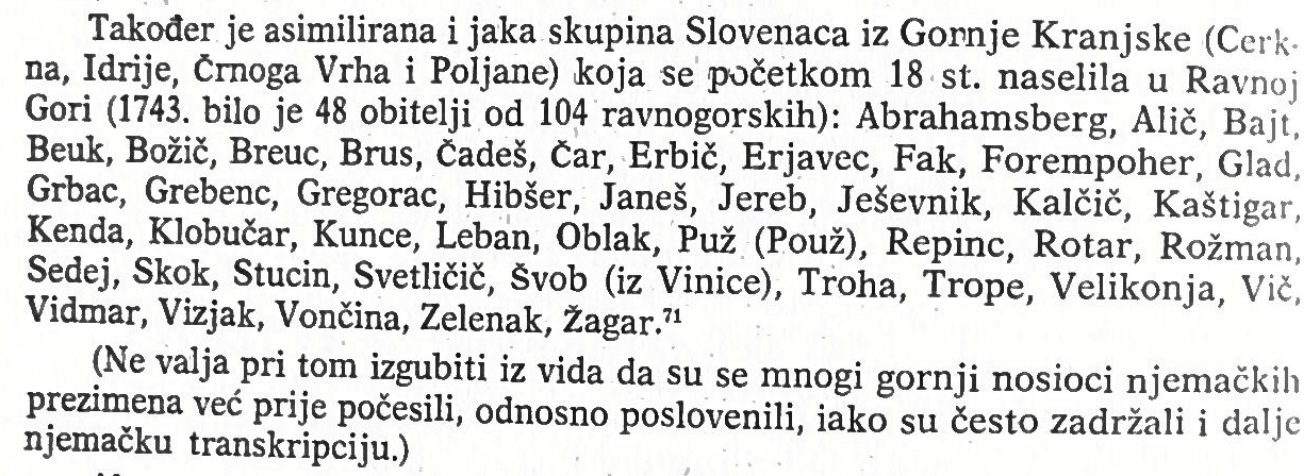
While researching ancestors from the Renko / Renka family from the area of Stara Sušica and Ravna Gora in Gorski kotar, Croatia, I quickly noticed that in the genealogical records from Ravna Gora quite a few surnames that sound Slovene appear: Troha, Kordiš, Sedej, Rotar, Bajt and others.
This prompted me to research the history of this area. The geographical location of Gorski kotar has, in the past, facilitated a strong flow of population and the intertwining of neighboring cultures.
Immigration
It turned out that numerous Slovenes immigrated to Ravna Gora and its surroundings from nearby places, mainly from the area of Babno Polje and Bela krajina, as well as from the somewhat more distant Idrija hills (Idrija, Cerkno, Črni Vrh, Poljane ...).
The main wave of immigration from Slovene territory most likely occurred during two key periods: during the construction of the Karolina road around 1727 and during the establishment of the glassworks in Stara Sušica in 1764. These large infrastructure and economic projects attracted numerous workers, foresters, and craftsmen.
This migration flow is also confirmed by literature. Historian Antun Herljević described the immigration to the vicinity of Ravna Gora after the opening of the Karolina road in detail in his book Ravna Gora from 1965.
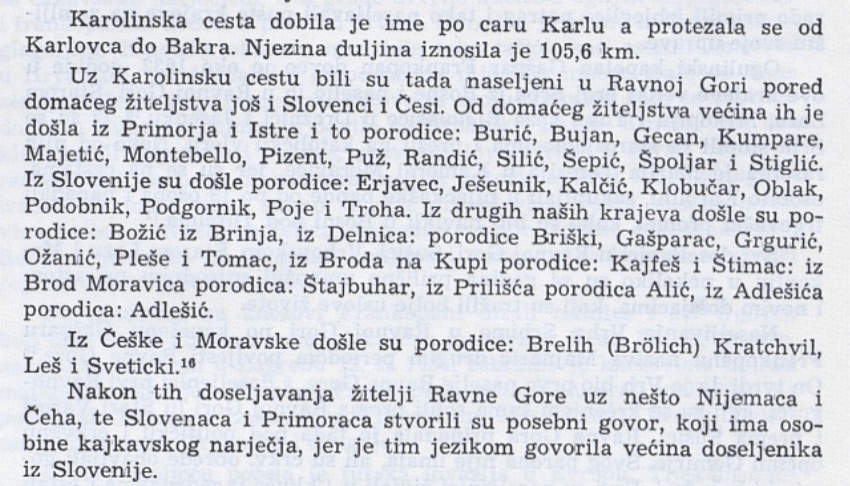
Similar findings are presented by Antun Burić in the second edition of the book Povijesna antroponimija Gorskog kotara u Hrvatskoj from 1983, where he explicitly mentions immigrants from Slovenia:
Rovtarsko dialect
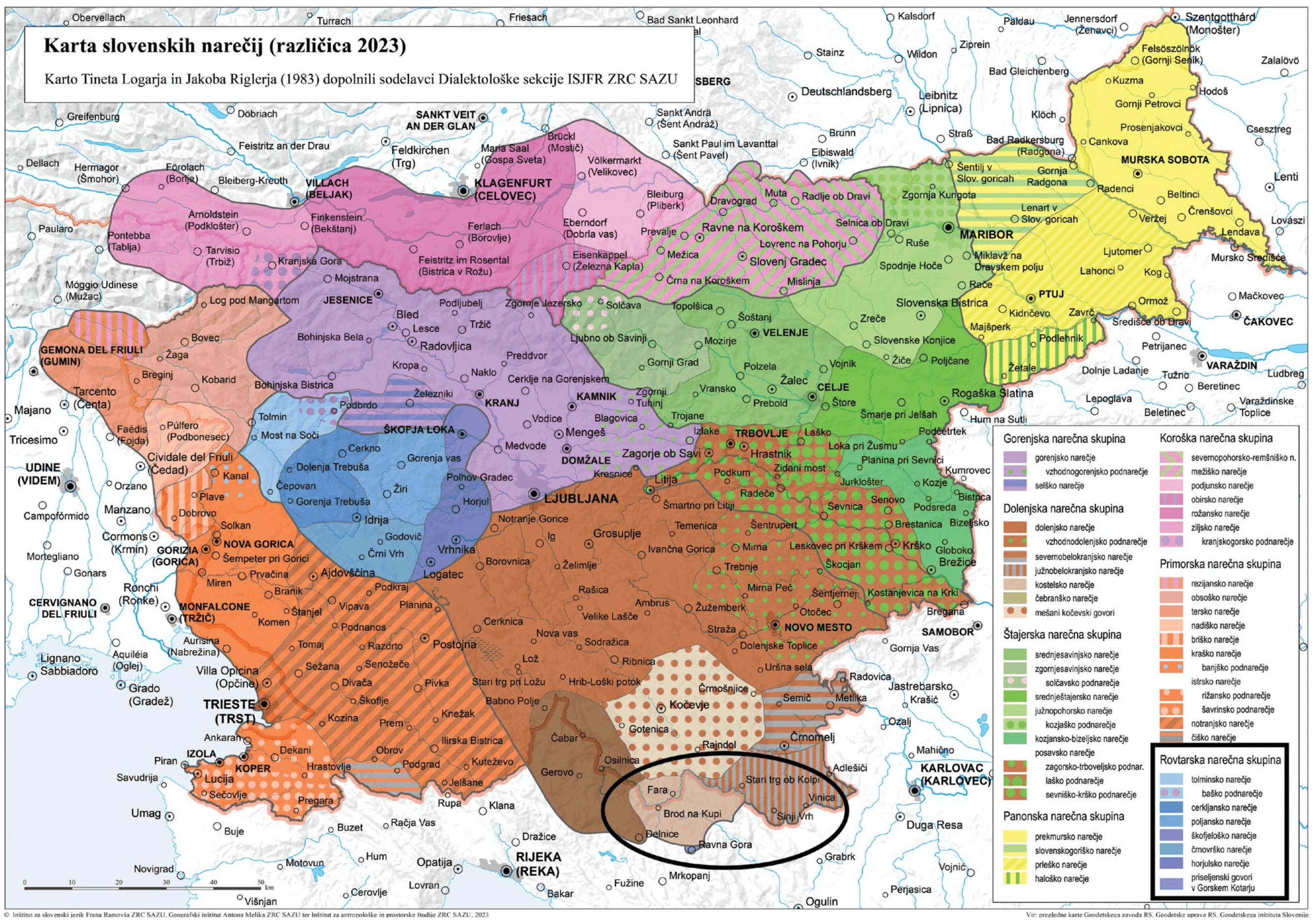
The consequence of strong Slovene immigration is also noticeable in the local speech. In Ravna Gora and its surroundings, a specific speech that mixes Kajkavian and Slovene Rovtarsko dialect is still used today. In general, the entire Gorski kotar is linguistically and culturally under a strong influence of the Slovene area.
Further research
Through genealogical research, I am trying to find connections between individual surnames in Croatia and Slovenia. Unfortunately, migrations occurred precisely at the time of the introduction of church vital records, making these connections very difficult to confirm.
Here are some ideas for further research:
- Archives in Ravna Gora and Idrijsko, which would document immigration.
- Stari trg pri Ložu has quite a few of 'my' surnames: Troha, Kordiš, Poje and others.
- Genetic testing that would show connections by paternal or maternal line for individual surnames.